

The rapid advancements in Artificial Intelligence (AI) have ushered in a transformative period for digital marketing, presenting both unprecedented opportunities and significant challenges. While AI promises enhanced efficiency, personalization, and data-driven insights, it has also created a landscape rife with confusion and uncertainty for many digital marketers. This analysis delves into the primary areas of bewilderment and the critical challenges faced by marketing professionals in the wake of extensive AI integration, particularly focusing on trends observed between 2024 and 2026.
Key Areas of Confusion and Challenge
1. The Impact of AI Overviews (SGE) on Search Engine Optimization (SEO)
One of the most significant sources of confusion stems from the introduction of AI Overviews (formerly Search Generative Experience or SGE) by Google. These AI-generated summaries appear prominently on search results pages, often providing direct answers to user queries without requiring a click-through to the original source .
Marketers are grappling with the implications of this shift:
•Reduced Organic Traffic: A major concern is the potential for a substantial decrease in organic website traffic. If users find their answers directly on the SERP, the incentive to visit a website diminishes, impacting traditional SEO strategies . Studies have indicated a median decrease of 37% in click-through rates (CTR) due to AI Overviews .
•Adapting SEO Strategies: The traditional focus on keyword rankings is evolving. Marketers must now adapt their content strategies to be more contextually relevant and valuable, aiming to be the authoritative source that AI Overviews cite, rather than just ranking high in organic listings . The challenge lies in optimizing for a system that synthesizes information rather than merely listing links.
•Accuracy and Trust: While AI Overviews aim for accuracy, instances of erroneous or misleading information have been reported . This raises questions about the reliability of AI-generated content and the potential for brands to be misrepresented if their content is inaccurately summarized.
2. Defining and Leveraging AI Agents
The concept of
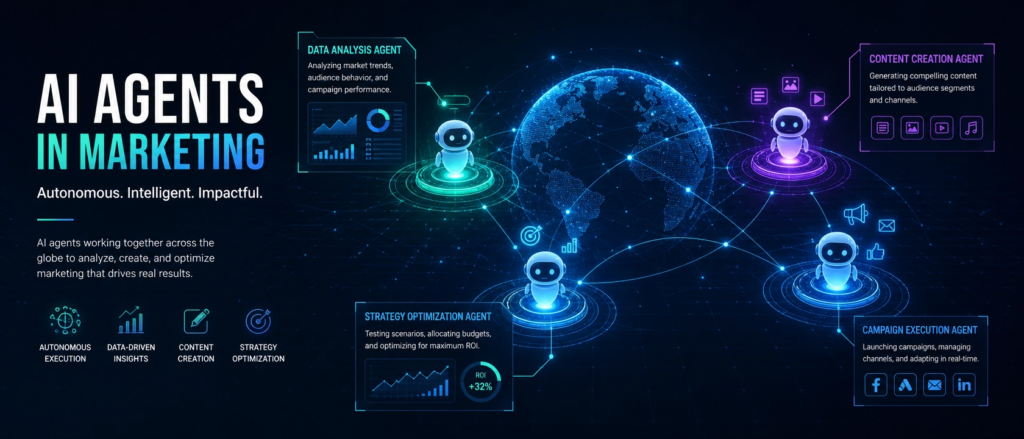
“AI Agents” has emerged as a major buzzword, yet it remains a source of significant confusion. Unlike generative AI, which creates content based on prompts, AI agents are autonomous systems capable of perceiving their environment, reasoning through tasks, and taking action to achieve specific goals without continuous human intervention .
The confusion arises from:
•Lack of Clear Definition: The term “AI Agent” is often used interchangeably with other AI tools, leading to a misunderstanding of its true capabilities and potential applications .
•Operationalizing Agents: Marketers are struggling to understand how to effectively integrate AI agents into their workflows. While the potential for automating complex tasks like local listings management, review responses, and campaign optimization is vast, the practical implementation and the shift from human execution to strategic oversight present a steep learning curve .
•The “Agentic” Shift: The transition from AI as a “copilot” to an autonomous executor requires a fundamental change in how marketing teams operate, moving from task-oriented roles to strategic management and governance .
3. The Measurement and Attribution Crisis
The integration of AI into marketing platforms and the increasing complexity of the customer journey have exacerbated the challenges of measurement and attribution.
•Eroding Confidence: Confidence in the ability to accurately measure the value of marketing efforts is declining. A Forrester report predicts a 7% slip in measurement confidence in 2026, driven by concerns over data transparency and the opaque nature of AI-driven measurement processes .
•The “Black Box” Problem: As AI algorithms take over more aspects of campaign management and targeting, understanding exactly why a campaign succeeded or failed becomes more difficult. This lack of transparency makes it challenging to attribute ROI accurately and optimize future strategies.
•Data Privacy and Security: The reliance on vast amounts of data to fuel AI models raises significant privacy concerns. The potential for AI-driven data breaches and the resulting legal and reputational risks add another layer of complexity to data management and measurement .
4. The “Blandification” of Content and the Quest for Authenticity
The widespread adoption of generative AI for content creation has led to a surge in generic, undifferentiated content, often referred to as “slop” .
•The Sea of Sameness: As more brands rely on AI to generate articles, social media posts, and ad copy, the digital landscape is becoming saturated with content that lacks a unique voice or perspective .
•The Authenticity Imperative: To break through the noise, marketers must find ways to inject human creativity, emotion, and authenticity into their campaigns. The challenge is balancing the efficiency of AI content generation with the need for bold, original, and culturally relevant messaging that resonates with consumers .
•Consumer Skepticism: Consumers are becoming increasingly adept at identifying AI-generated content and may develop an aversion to brands that rely too heavily on it without adding genuine value .
5. The Skills Gap and Organizational Restructuring
The rapid pace of AI development has created a significant skills gap within the marketing industry.
•Adapting to New Tools: Many marketers feel ill-equipped to utilize advanced AI tools effectively. A survey indicated that only 37% of employees feel confident adapting AI systems for work .
•Evolving Roles: The role of the digital marketer is shifting from execution to strategy and orchestration. This requires a new set of skills, including prompt engineering, data analysis, and AI governance, which many professionals currently lack.
•Budget and Headcount Pressures: The expectation that AI will drive efficiency has led to tighter budgets and reduced headcounts in many organizations . Marketers are expected to do more with less, increasing the pressure to master AI tools quickly.
Conclusion
The post-AI development era has undoubtedly brought a wave of confusion and volatility to the digital marketing landscape. The biggest challenges lie not just in adopting new technologies, but in understanding their profound implications on core marketing principles like SEO, measurement, content authenticity, and organizational structure. To navigate this complex environment successfully, marketers must move beyond the hype, focus on strategic implementation, prioritize data transparency, and continuously adapt their skills to leverage AI as a powerful tool rather than a replacement for human ingenuity.